

More EU Countries Ditching American Cloud Services
Here’s the Map

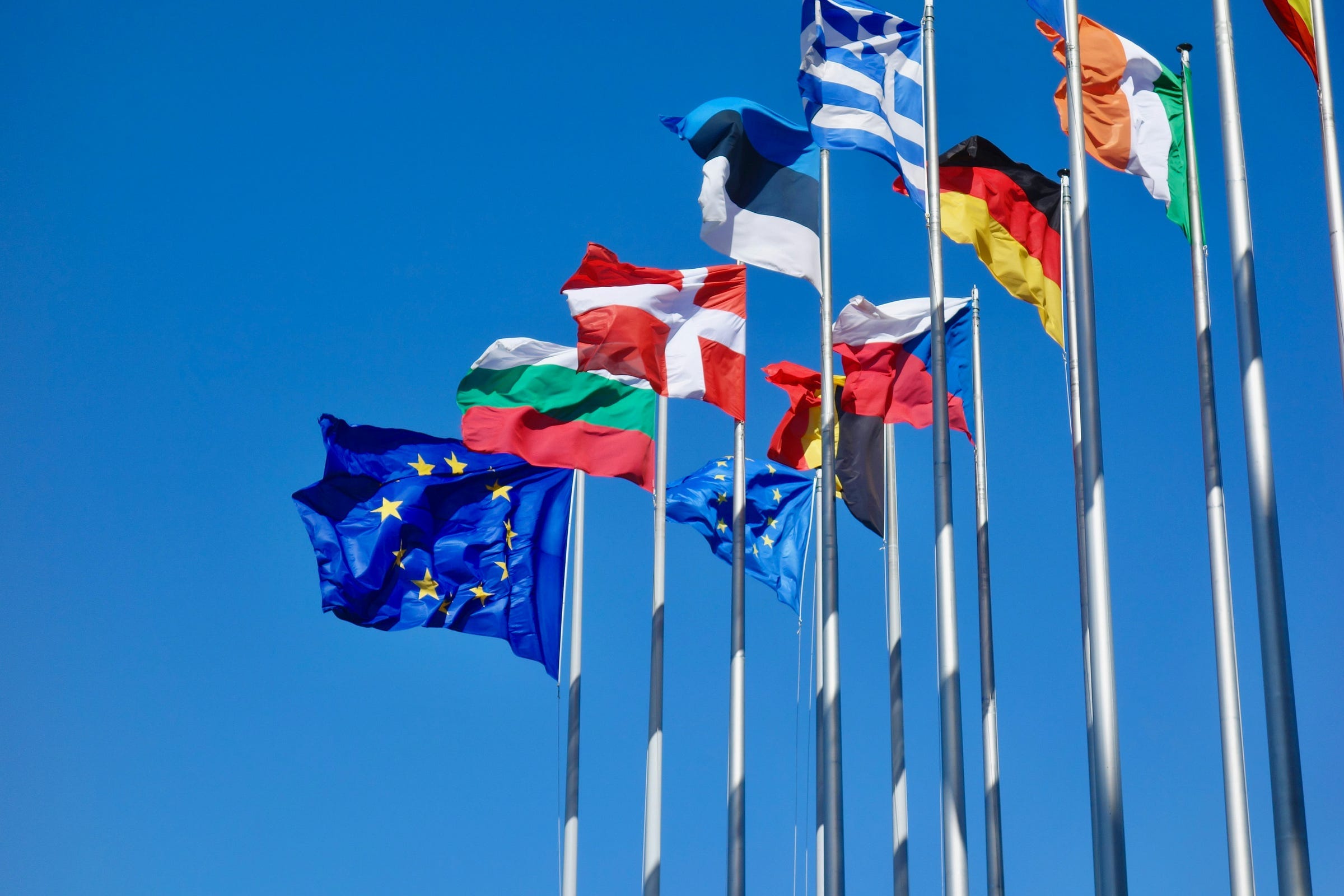
I wrote about Germany and Denmark ditching Microsoft a while back.
Since then, things have accelerated.
It is starting to look like a coordinated continental shift. And the reason behind it is more serious than coverage suggests.
First, the actual reason this is happening
It’s not just cost. Although this is a major factor. Just removing Microsoft 365 will save Germany hundreds of millions of Euros in license fees.
It’s more than money.
In June 2025, Microsoft France was asked directly in a parliamentary hearing whether the company could guarantee that European data stored on Microsoft servers would never be requested by US authorities.
The answer was no.
That’s not a surprise to anyone who knows what the US CLOUD Act is. It’s an American law that allows US authorities to demand data from US companies, regardless of where that data is physically stored.
It doesn’t matter if the servers are in Frankfurt or Dublin. If the company is American, US authorities can get to the data.
Microsoft can’t override US law. Nobody expected them to say anything different. But hearing it stated out loud in a government hearing, may have changed something.
This might have been the (crucial) moment a lot of European governments stopped treating digital sovereignty as a policy preference and started treating it as a security problem.
The map, as it stands
Denmark
Denmark’s Ministry of Digitalisation is switching from Microsoft Office to LibreOffice, with a full migration to Linux planned. The Digital Minister summed it up well: “we must never make ourselves so dependent on so few that we can no longer act freely.”
Germany — Schleswig-Holstein
This is where I live, so I’ve been watching it closely.
Schleswig-Holstein is moving 30,000 public employees off Microsoft Office, Outlook, and Windows entirely. LibreOffice, Open-Xchange, and Linux are replacing them. The projected savings: €15 million per year. That’s €15 million staying in the German economy instead of going to Redmond.
But it will take a significant amount of time and effort.
France
Eleven French ministries have already installed LibreOffice on 500,000 workstations. Quite a rollout. France has also co-hosted a Summit on European Digital Sovereignty with Germany in November 2025, where both governments committed to accelerating the shift.
Italy
Italy’s Ministry of Defense has standardized 150,000 PCs on LibreOffice and ODF (Open Document Format).
The defense sector moving first is notable. If your security model already assumes you can’t fully trust foreign infrastructure, open source becomes the obvious choice.
The Netherlands, Germany, France, Italy — together
In July 2025, these four countries formally established the European Digital Infrastructure Consortium for Digital Commons.
The goal is to jointly develop and scale sovereign digital tools, including OpenDesk, an open-source office and collaboration suite built by Germany’s Centre for Digital Sovereignty.
The International Criminal Court
In November 2025, the ICC in Den Haag replaced its Microsoft software with OpenDesk. An international legal institution, processing some of the most sensitive documents in the world, decided it could no longer use American software.
What Microsoft is doing about it
Trying to adapt.
Microsoft has been rolling out what they call “sovereign cloud” offerings: European data centers, European-operated, with claims of data independence.
In November 2025 they expanded these capabilities again.
But there’s a fundamental problem they can’t solve. As long as Microsoft is an American company, it is subject to American law. No amount of data center geography changes that. And that’s exactly what the June 2025 hearing made impossible to ignore.
The bigger number
61% of European CIOs and tech leaders said in 2025 they want to increase their use of local cloud providers.
More than half say geopolitics is actively preventing them from going further with US-based platforms.
That’s not a fringe opinion anymore. That’s the majority.
What this means
Countries and especially the public sector move slow. Migrations are messy. Tools are not always ideal and perfect.
LibreOffice isn’t perfect for everyone. But it’s gotten pretty great.
Linux still has a learning curve for most government employees. Yet, it’s powerful and capable.
There will be complaints, and some of those complaints will be valid.
But the direction is set. And unlike a lot of tech trends, this one has legal pressure, budget pressure, and political pressure all pointing the same way at the same time.
The US CLOUD Act isn’t going anywhere. The Trump administration hasn’t exactly made European governments feel more comfortable about US data access. And every €15 million saved by Schleswig-Holstein is a data point that other German states are looking at right now.
It started with a couple of countries. It’s now four founding members of a consortium, eleven French ministries, the ICC, and 61% of European tech leadership, and many more saying they want out.
This story is just beginning.