

The Forgotten Women Who Built Modern Tech
You use their work every day. You probably don’t know their names.

Can’t blame you. I only learned half of these names recently.
The history of tech that gets repeated is mostly the same guys. Jobs. Gates. Wozniak. Berners-Lee. Turing, when we feel like being inclusive about who counts as a founder. The women who built the foundations underneath all of that didn’t make the poster.
So here are four. There are more, of course.
Hedy Lamarr
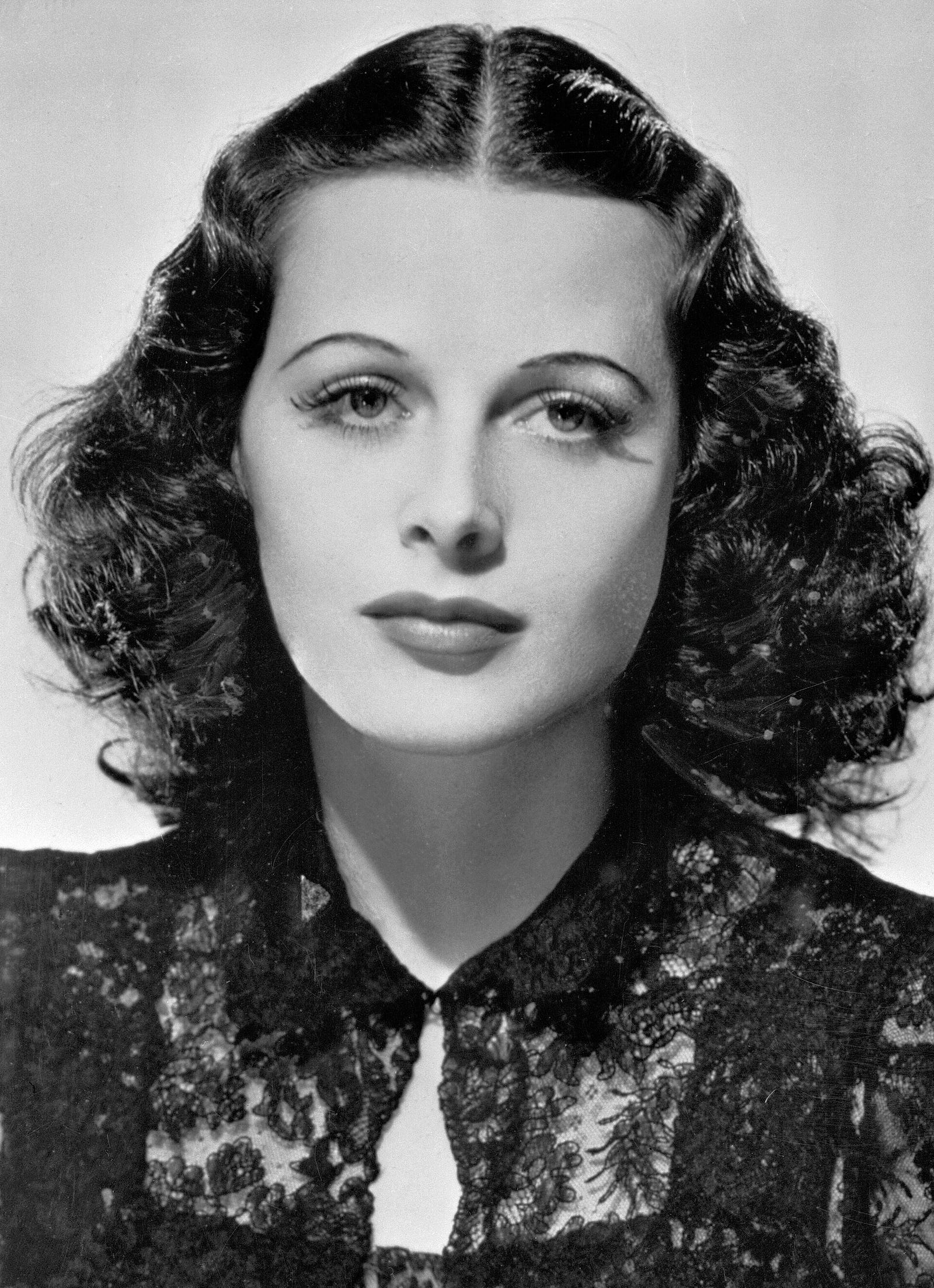
She was a Hollywood actress in the 1940s. Marketed as “the most beautiful woman in the world,” which is the kind of label that tends to flatten everything else about a person.
What got flattened in her case was a patent.
In 1942 she co-invented frequency hopping spread spectrum. Originally meant to keep Allied torpedo signals from getting jammed by the Nazis. The Navy filed it away and ignored it for decades.
What we use today because of her: Wi-Fi. Bluetooth. GPS. Every wireless protocol that hops across frequencies to avoid interference traces back to that idea.
She got a Pioneer Award in 1997, three years before she died.
Margaret Hamilton
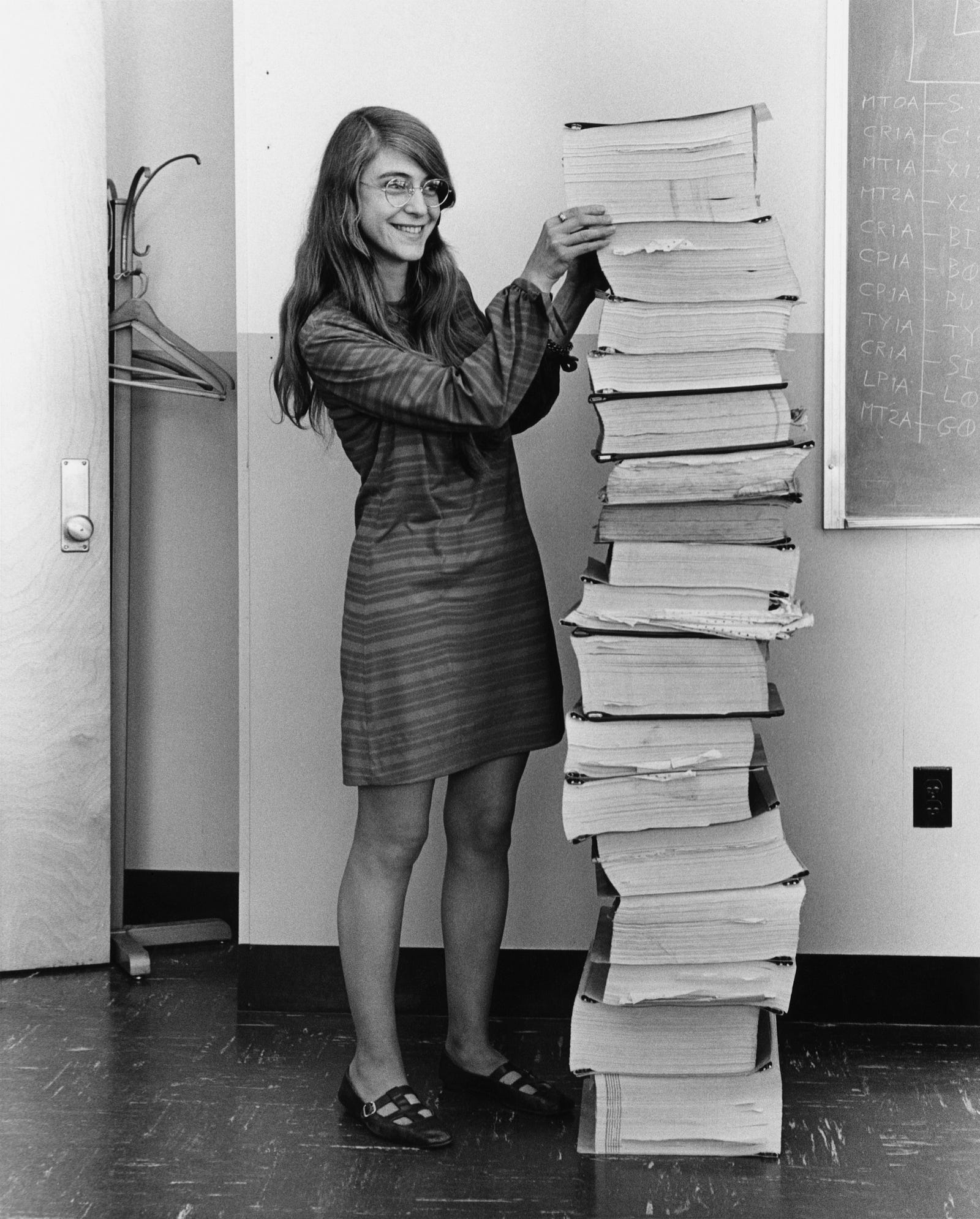
She led the team that wrote the onboard flight software for the Apollo missions. The code that put humans on the moon and brought them home.
The famous photo is her standing next to a stack of printouts taller than she is. That’s the source code. All of it. Hand-written, hand-checked.
She also coined the term “software engineering.” At the time it was a joke. Engineering was for hardware. Software was something you scribbled. She used the term on purpose, to argue that what they were doing was engineering and deserved the same rigor.
What we use today because of her: the entire framing of software as a discipline. Every job title with “engineer” in it. Every conversation about reliability, error handling, priority interrupts (her code on Apollo 11 invented the modern version of that, by the way, and it’s literally what saved the landing).
She got the Presidential Medal of Freedom in 2016. Forty-seven years after Apollo 11.
Radia Perlman
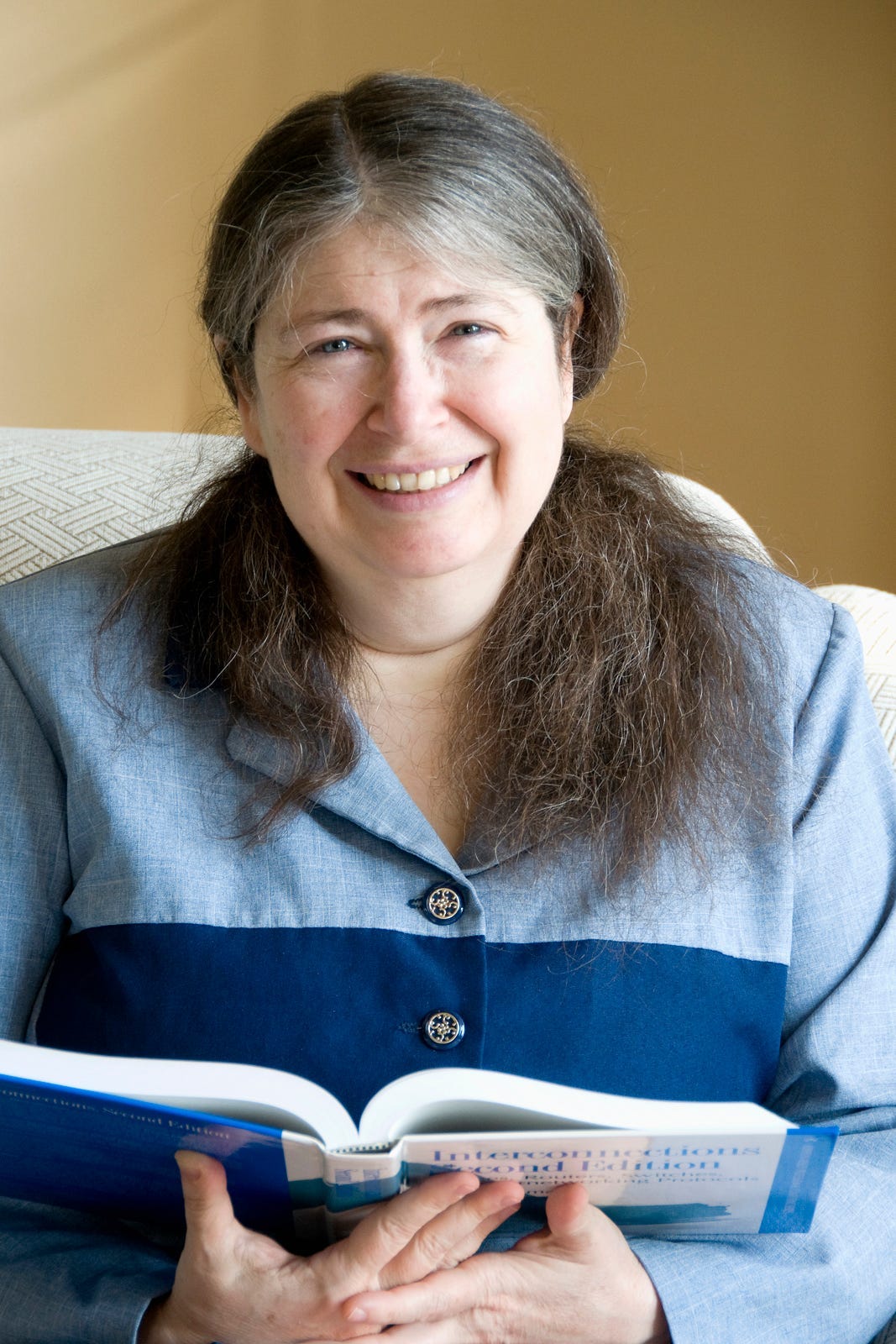
If you’ve ever connected to the internet, her algorithm is somewhere in the path your packets took.
She invented the Spanning Tree Protocol in 1985. It’s what lets network switches talk to each other without packets going in circles forever and melting the network. Without it the modern internet doesn’t work at scale.
She wrote a poem to explain the algorithm. It’s in the original paper. What a great idea.
She doesn’t like being called “the mother of the internet.” Says it’s reductive.
What we use today because of her: every Ethernet network. Every office Wi-Fi.
Karen Spärck Jones
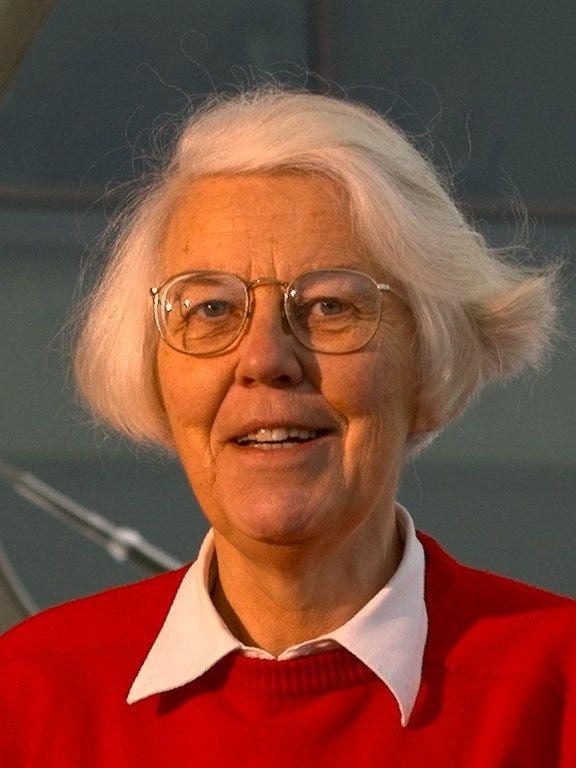
She figured out how to teach a computer which words in a document matter.
In 1972 she introduced inverse document frequency. The idea that a word’s importance isn’t how often it appears, but how rare it is across the whole collection. Common words tell you nothing. Rare words tell you what the document is actually about.
That became TF-IDF. Which became the foundation of every search engine. Which became Google.
What we use today because of her: search. All of it. Even the modern AI stuff still uses TF-IDF as a baseline. Your Google query, your Apple Spotlight, your Algolia search bar on some random e-commerce site. Her math is in there.
She was a computational linguist. Same field I studied. I heard about TF-IDF. I did not learn her name until much later.
Why we don’t hear about them
Unfortunately, mainly because they’re women.
Patents filed under their employers. Credit going to the men who managed them. Awards arriving forty years late. Histories written by people who weren’t paying attention (to women).
Also: their work tends to be infrastructure. Frequency hopping isn’t a product you can hold. Spanning tree isn’t a thing you click. TF-IDF isn’t an app. The work that holds everything else up is the work that disappears into the background.
Whereas the guy who designed the icon set gets a documentary…
The Bottom Line
I use these ideas, inventions, genius creations every single day, and I didn’t know the names of the women that brought them into the world.
If you’ve heard of all four of them already, kudos.
If you haven’t, now you have. Spend ten minutes on each one. The stories are quite amazing.