
The Open Source Tools That Are Replacing Microsoft Office in Schools
Student data

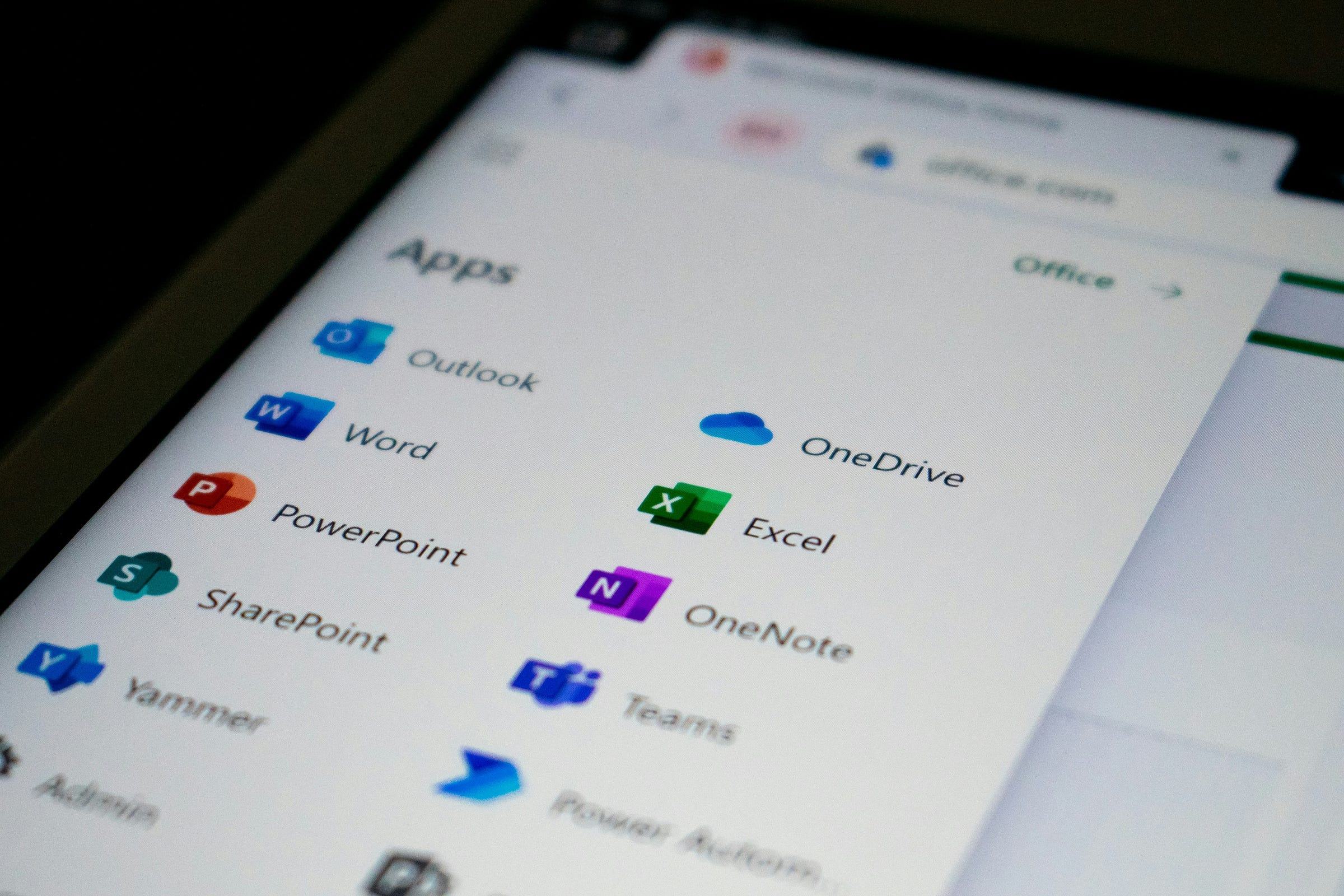
The digital sovereignty story in Europe gets a lot of coverage when it involves governments.
Germany ditching Microsoft. Denmark going Linux. The ICC replacing Office with open source software.
I find this fascinating.
Schools are another part of the same story. An important one. And the tools being used there are worth knowing about.
Why schools specifically
Schools deal with student data. Minors’ data. Crucial!
Under GDPR, that’s treated differently than regular business data. And under the US CLOUD Act, any data stored on American platforms is potentially accessible to US authorities, regardless of where the servers are physically located.
In November 2022, France’s Ministry of National Education told public schools directly: stop using Microsoft 365 and Google Workspace.
Both platforms, in their free tiers, process student data in ways that don’t meet European data protection requirements. The recommendation was to move to on-premise solutions or EU-hosted alternatives.
Germany went further. Several German states have outright banned Microsoft 365 in schools on data protection grounds.
When you put children’s data in the mix, the political will to actually enforce this turns out to be much higher.
The tools doing the replacing
LibreOffice
This is the big one. Free, open source, offline, and developed by the Document Foundation, a non-profit based in Berlin. It covers everything Microsoft Office does: word processing, spreadsheets, presentations, databases. Compatible with .docx, .xlsx, .pptx files.
It’s not as polished as Microsoft Office. The interface is a bit dated. But for a school where the goal is teaching students how to use a word processor, not which word processor, it’s more than enough.
Schleswig-Holstein is rolling it out to 30,000 teachers as part of its broader Microsoft exit. France has 500,000 government workstations running it. Italy’s Ministry of Defense has standardized on it across 150,000 machines.
OnlyOffice
If LibreOffice is the desktop-first alternative, OnlyOffice is the Google Docs-first alternative.
It looks more like Google Workspace. Real-time collaborative editing, browser-based, familiar interface. The difference is it can run entirely on your own server, inside your own country, under your own data protection rules.
OnlyOffice is free for schools and available at educational discounts for universities. For schools that have students working together on documents in real time, it’s the closer comparison to what Microsoft 365 and Google Workspace actually offer.
OpenDesk
This one is newer and specifically built for European governments, though it’s starting to appear in educational institutions too.
OpenDesk is developed by Germany’s Centre for Digital Sovereignty (ZenDiS) and bundles together a set of open-source collaboration tools: file storage, video calls, messaging, document editing. Think of it as a European-built Microsoft 365, assembled from existing open source parts.
The International Criminal Court switched to it in November 2025. Germany, France, Italy, and the Netherlands are backing it jointly through their Digital Infrastructure Consortium.
Office EU
This is the newest one. Launched March 2026.
Office EU is a 100% European-owned cloud office suite. Servers in Europe. Company in Europe. No US corporate parent that can be compelled to hand over data by an American court.
It’s early. The product is new. But the market it’s targeting is obvious, and the timing is not an accident.
Country by country
Germany: Microsoft 365 banned in schools in multiple states on GDPR grounds. Schleswig-Holstein is adding 30,000 teachers to its open source rollout. LibreOffice and OnlyOffice are the default recommendations.
France: Ministry of National Education officially advised against Microsoft 365 and Google Workspace for student data since 2022. French schools are moving to on-premise and EU-hosted alternatives. Eleven ministries already on LibreOffice at the government level.
Denmark: A new open-source school platform launched in January 2026, backed by 23 out of 83 municipalities already. The country is treating schools as the next logical step after the government transition.
Italy: The Ministry of Education has been pushing LibreOffice adoption. The 150,000-PC standardization at the Ministry of Defense is functioning as a model for other institutions.
What’s hard about this
Compatibility is still a real problem.
A student who learns on LibreOffice will be fine. But the moment they need to collaborate with someone using Microsoft Office, the format conversion issues start. Not always, and not catastrophically, but often enough to be annoying.
Teachers need retraining. That costs time and money and goodwill.
And Google Workspace in particular has become so embedded in how many institutions run, especially for things like shared drives and Google Classroom, that replacing it requires replacing an entire workflow.
None of that is unsolvable. But it’s time-consuming.
The bottom line
Microsoft and Google built their school market share over twenty years by giving their products away free or nearly free to educational institutions.
It worked. Most kids in Europe grew up learning on Microsoft or Google software, which made those tools feel default, and made switching feel like loss.
What’s changed is that the free wasn’t actually free. It came with data terms that European regulators are no longer willing to accept, especially for children.
Open source was always cheaper. But it’s not just about the cost. It’s also the legally safer option. That combination tends to move things faster than either argument alone.